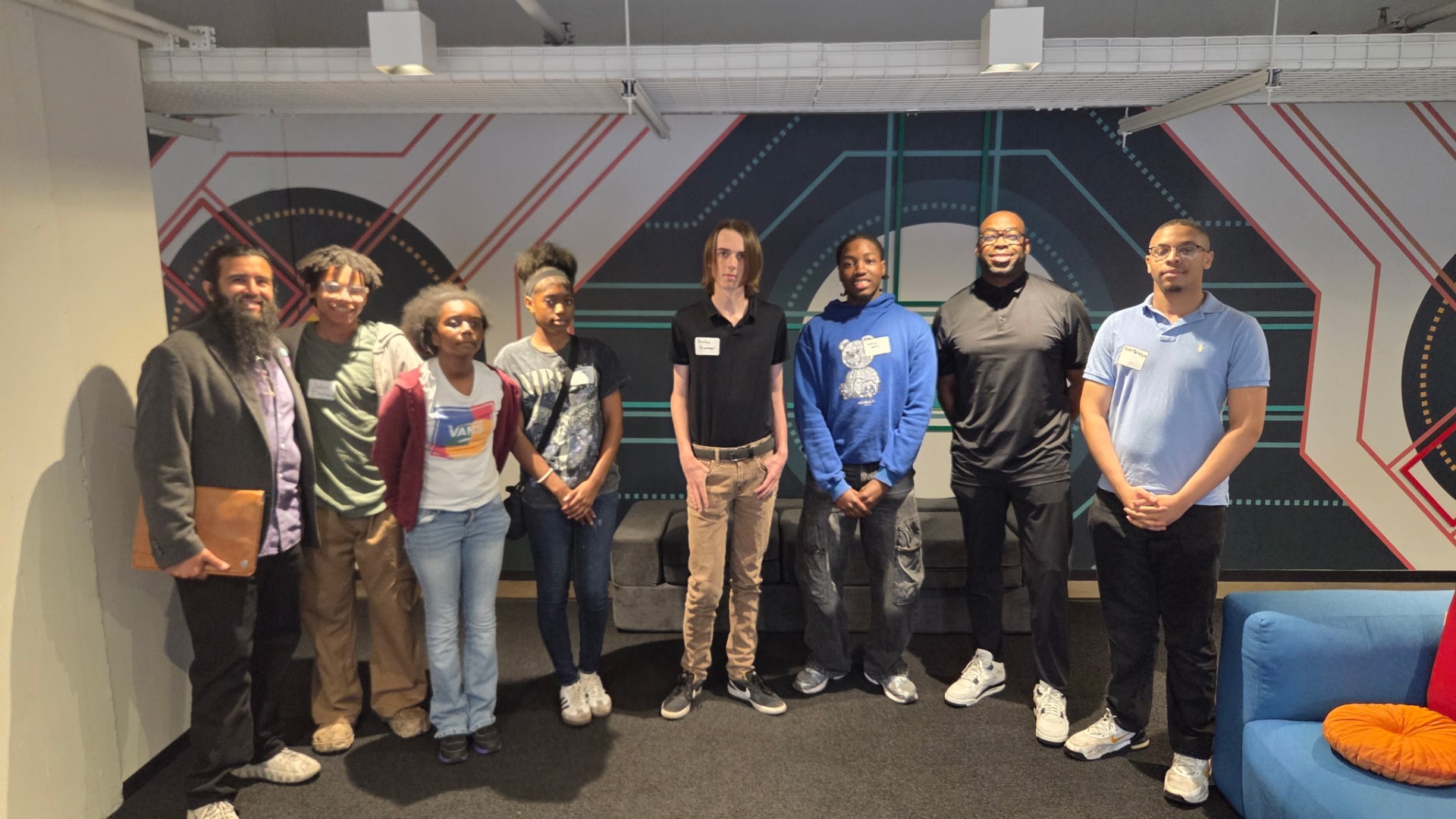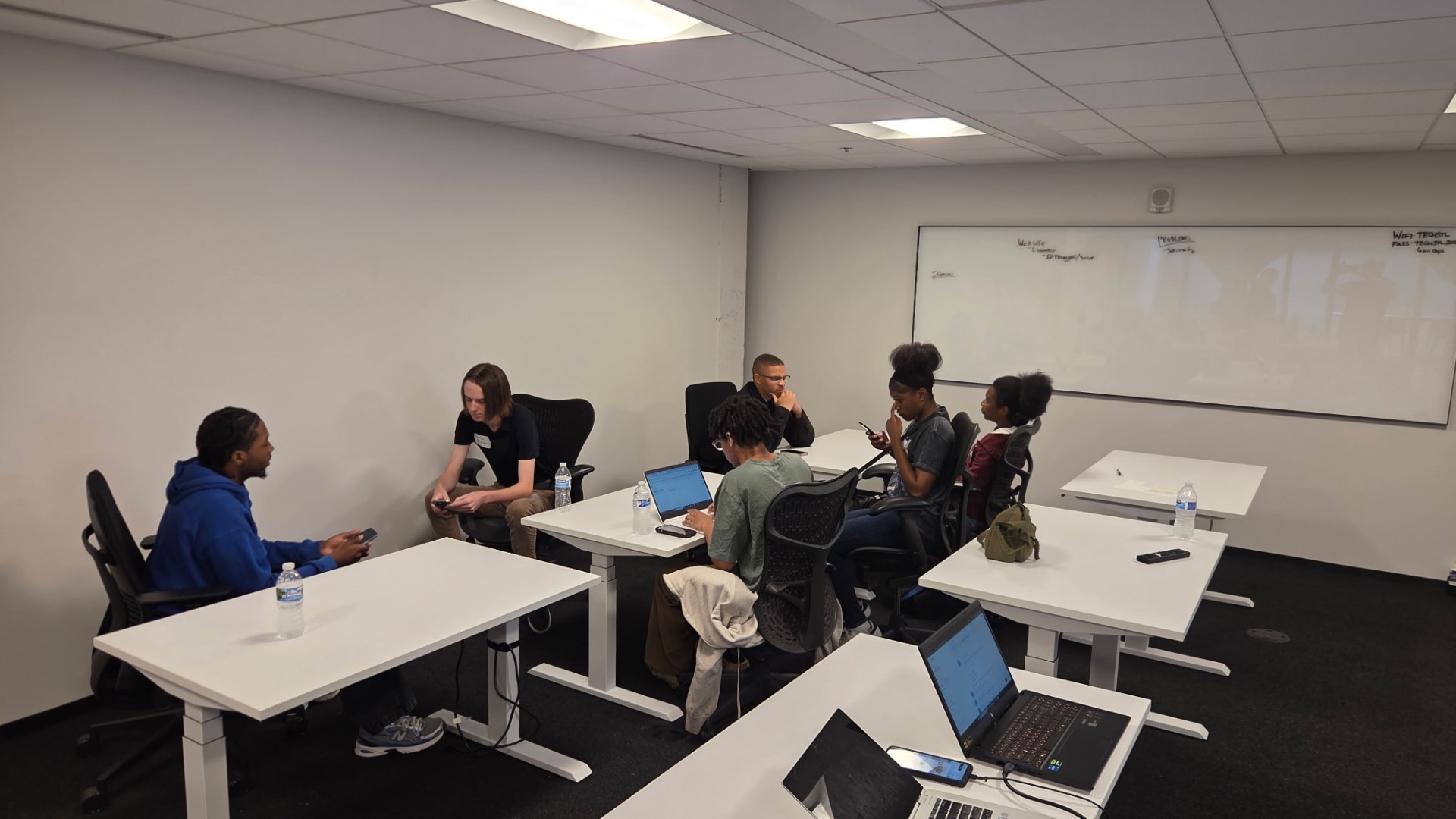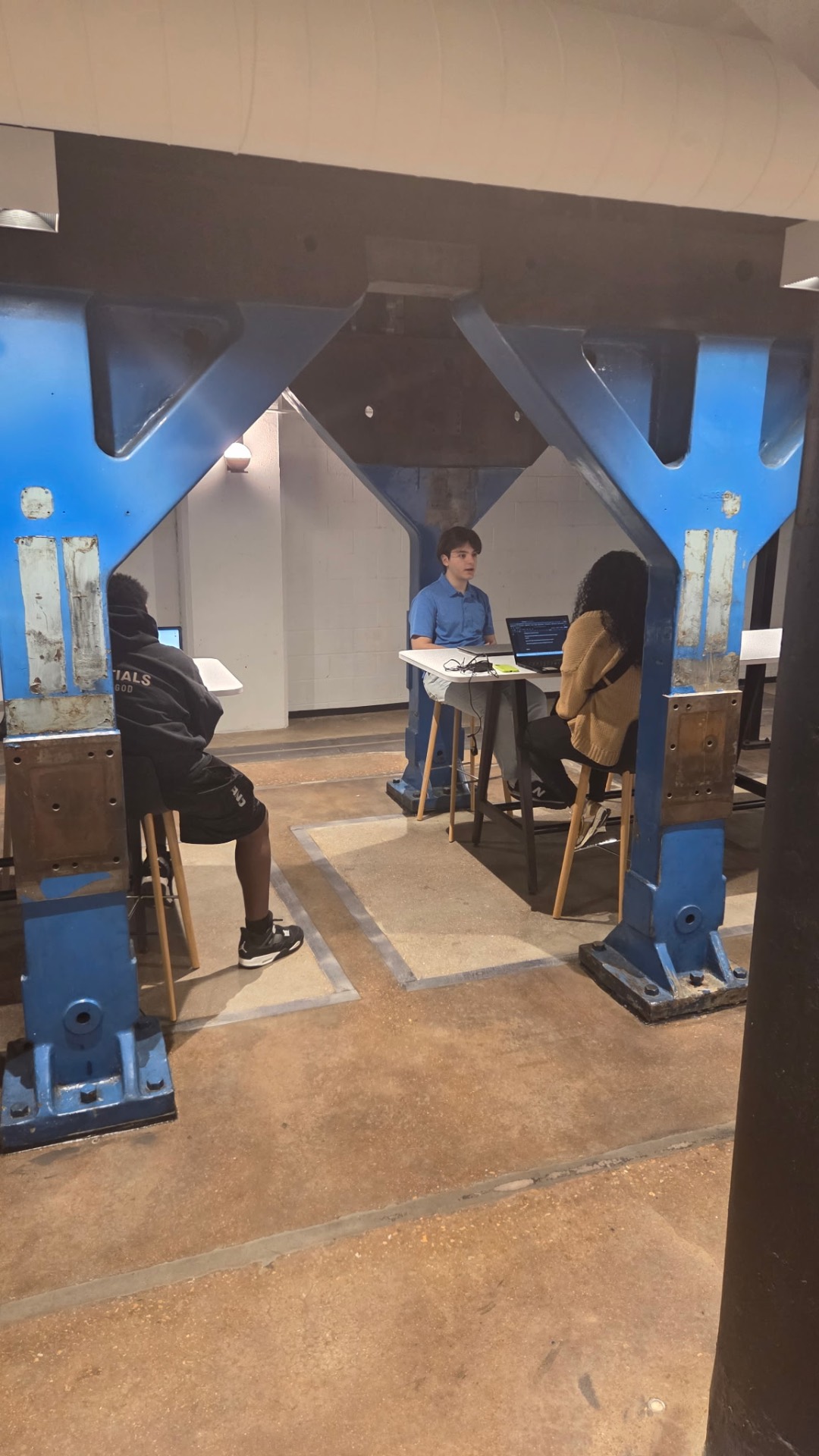
Students who completed both the pre- and post-program survey reported measurable growth across technical, professional, and innovation skills. Five of eleven interns completed both surveys — a small sample, and a consistent one.
By the end of F7
- Every student had built and published a website, compared to 20% before the program.
- Every student had carried a long-term project from start to finish, up from 40%.
- Every student had presented their work publicly, up from 60%.
- Every student had interviewed people before designing a solution, up from 40%.
- Every student had published work online, up from 20%.
- 60% had used project management software — none had before.
AI proficiency started high and still moved: 4.6 out of 5 before, 4.8 after, with 40% of students reporting an increase. The interesting part is not that they used AI — they already did. It is that they learned to use it as a research and building partner while still owning the decisions.
“My confidence has definitely increased. I know a lot more about what it takes to solve a problem now.”
Publishing is the intervention. The moment a project has a URL and an audience, "good enough" stops being a student's own private standard.
The full methodology, every survey row, and the reflections behind these numbers are in the Summer 2026 Pilot Summary Report.